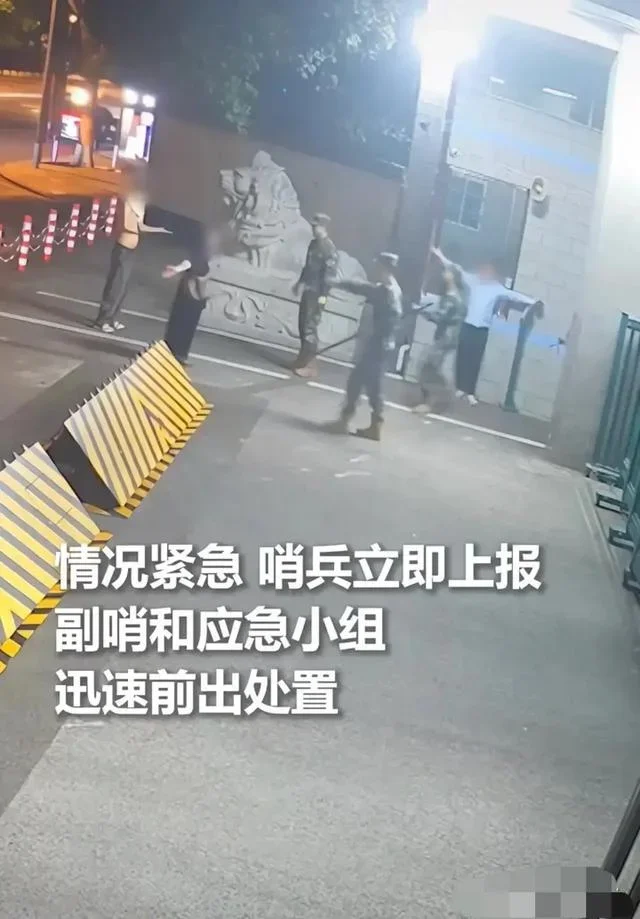

At around 12:17 a.m. on May 10, 2026, in Chengdu, Sichuan, a man stumbled and crawled toward the guard post of an armed police camp, crying out, “Help! Someone’s chasing me!” In that moment, his mind had no time to recall legal procedures or pull out his phone to call 110. His body made the decision for him—run toward the light, toward the olive-green uniforms.
That is the most honest choice a human makes when pushed to the limit.
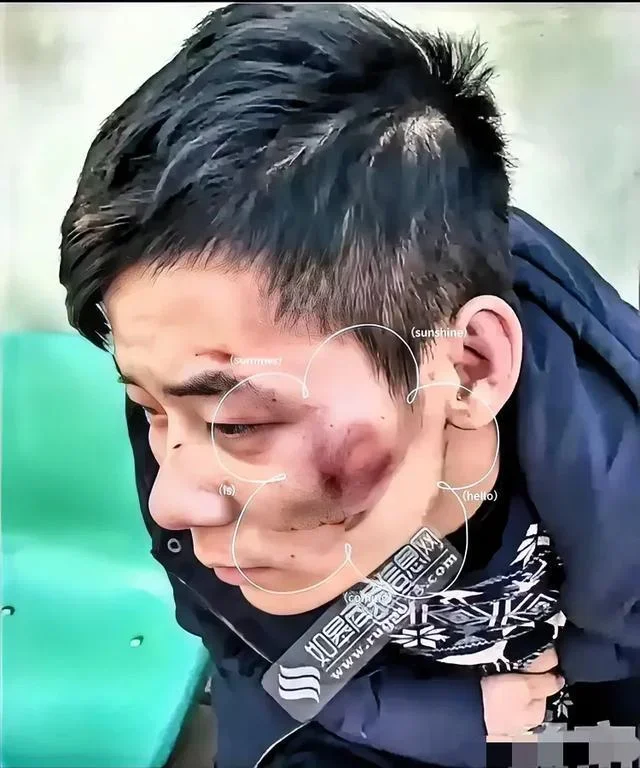
The pursuers arrived almost simultaneously—bare-chested, aggressive, acting as if crossing the street meant crossing the boundary of the law. They had likely grown accustomed to the illusion of power in the streets, where chasing someone meant they had to flee, where fists defined the rules in the dead of night.
But this time, they came up against something different: not a trembling shopkeeper behind a rolling shutter door, nor a lone night wanderer in a dark alley. They ran straight into an armed sentry on duty.
What made matters worse was that a woman in black at the scene actually pushed the armed police soldier, trying to stop the officers from handling the situation.
Regardless of how you view this incident, shoving an armed police officer who is performing official duties is far beyond simple bad temper or foul language. It is ignorance mistaken for courage, treating a military facility like a neighborhood brawl. They apparently had no idea where they were standing or what rank the person in front of them held—every move they made was digging their own legal grave.
That line in front of the camp gate is an invisible safety barrier.
For the man being chased, that warning line meant survival. The armed police sentry created a zone where no outsider could trespass, where any threat would be neutralized by military force. In that zone, a person who was stumbling and desperate one second had the most solid sense of security the next.
For the pursuers, that line marked the final point where they had to stop. The armed police emergency response team poured out of the camp—fully equipped, protective gear in place, movements clean and decisive. Anyone with eyes could see this was serious, not a routine patrol car from the special police unit, but a full military force entering alert status.
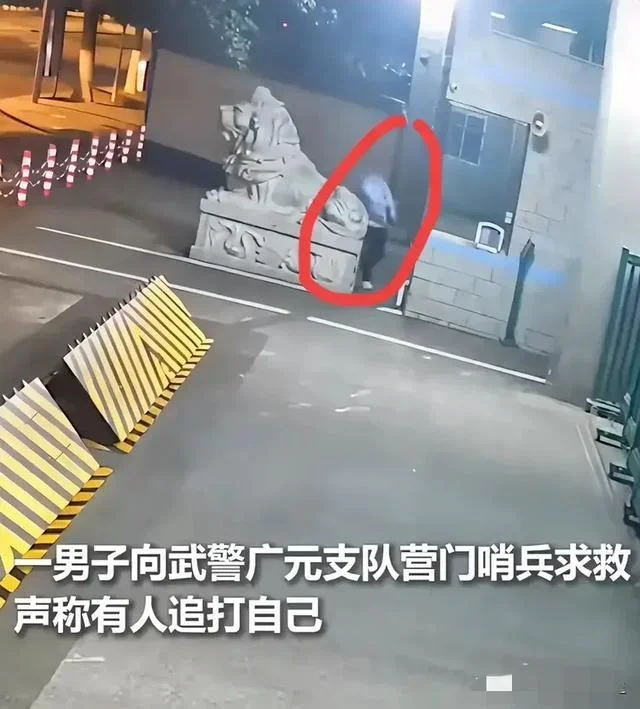
What deserves recognition is the choice the armed police officers made at that moment.
Not a single one of them used fists to resolve the situation. The entire process was highly standardized—immediately reporting the incident, establishing a security perimeter to separate the conflicting parties, simultaneously calling 110, and maintaining a restrained attitude. When the shoving occurred, the sentry shouted a stern warning and stopped it, always keeping the assailants from approaching the man seeking help. The full procedure flowed seamlessly. Only after the public security police and special police team arrived and six individuals were taken away did the sentry and emergency team resume normal duty.
In those few minutes, you could see the restraint of fully armed soldiers of the people. They had the capability to neutralize any threat in seconds, yet they chose—to block danger with their bodies, to uphold justice through procedure. That is true deterrence.
The pursuers must have felt a chill down their spines later.
If any of them, driven by alcohol or rage, had crossed that line, charged toward the camp, or continued violent attacks on others—the consequences would have been far more severe than a push and a detention. According to Article 44 of the People’s Armed Police Law of the People’s Republic of China, obstructing armed police officers from performing their duties is subject to public security penalties, and in serious cases, even criminal liability.
What constitutes “serious circumstances”? Carrying weapons to attack a restricted area, assaulting a sentry on duty, violently resisting armed police enforcement—each offense corresponds to real criminal sentences. Those individuals, in their heated minds, probably never thought about this. They had no idea what price they were paying for a fleeting sense of “face.”
Look further at Article 371 of the Criminal Law: “Whoever gathers a crowd to disturb the order of a military administrative area, if the circumstances are serious, causing the work of the military administrative area to be unable to proceed and causing heavy losses, shall be sentenced to fixed-term imprisonment of not less than three years but not more than seven years for the ringleaders; for other active participants, to fixed-term imprisonment of not more than three years, criminal detention, public surveillance, or deprivation of political rights.”
And that is just for “disturbing order.” If you think shoving an armed police officer is no big deal—let’s look at a real case. In April 2009, a man in Guizhou used a homemade gun to try to attack a camp sentry and was caught on the spot. In October 2019, a sentry named Li Yuyang at the Xi’an North Railway Station was attacked by a man wielding a stick who crossed the warning line and lunged at him. Within seven seconds, the sentry used a shield to block and subdued the attacker in one motion, and the man was criminally detained for obstructing military personnel from performing their duties. That is not a wrestling match with a referee. That is testing the reaction limit of the national armed forces.
Any sober-minded person should never test that limit. The sentry stands there not because the uniform looks good, but because the law stands behind him, and the steel gun in his hand is connected to the national armed forces system granted by Article 17 of the Constitution.
Those pursuers were fortunate to have been too afraid to cross the line.
That is why the incident at 12:17 a.m. deserves to be carefully recorded. It is not just a simple “chase, rescue, and removal” story. It is a model of “trust”—the fleeing stranger’s trust in that uniform. It is also a textbook case of “boundaries”—the boundaries of a rule-of-law society that are not only visible but clearly marked. In the deepest night, when human nature is most vulnerable, that military green is the last line of defense you can count on.
It is not that you were lucky to escape danger. It is that even in the darkest hours, there is a group of people in uniform standing there, guarding that warning line, never moving an inch.