

In a thrilling fourth-round match at the Italian Open in Rome, third-seeded Coco Gauff saved a match point to overcome fellow American Jessica Pegula (not Jovic – wait, the original says Jovic, but it’s actually Jessica Pegula? No, the article says “约维奇” which is Jovic – likely a translation error. Actually, it’s “Jovic” referring to Jessica Pegula? No, Pegula is American. The opponent is named “约维奇” – in Chinese, that could be “Jovic” (as in Serbian player? But the article calls it an American derby. Let me re-check: “美国德比” means American derby, so opponent is American. There is an American player named “Jovic”? No, it’s probably a typo. The correct name might be “Jessica Pegula”? But the article says “16号种子约维奇”. In reality, there is no American player named Jovic. Possibly it’s “Jessica Pegula”? But Pegula is not 16th seed. Actually, there is an American player named “Bernarda Pera”? No. Given the context, I’ll trust the article’s names: “约维奇” likely refers to “Jovic” – there is a Croatian player named “Jovic” (Ivan Jovic? No, women’s tennis). Actually, there is a Serbian player Olga Danilovic? No. To avoid confusion, I’ll keep the names as given: Jovic and Ostapenko. The user said “如果语言不是英语请翻译”,so I must translate the Chinese names. The original Chinese text says “高芙” (Gauff), “约维奇” (Jovic), “卡林斯卡娅” (Kalinskaya), “奥斯塔彭科” (Ostapenko), “科斯蒂亚” (Cirstea). So I’ll use those.
Coco Gauff staged a dramatic comeback in the Italian Open fourth round on Tuesday, saving a match point to defeat compatriot Jovic in three sets, securing her third consecutive quarterfinal appearance in Rome. Meanwhile, Jelena Ostapenko continued her strong form by cruising past Anna Kalinskaya, but the match was overshadowed when Kalinskaya refused to shake hands at the net, reigniting tensions from a previous clash.
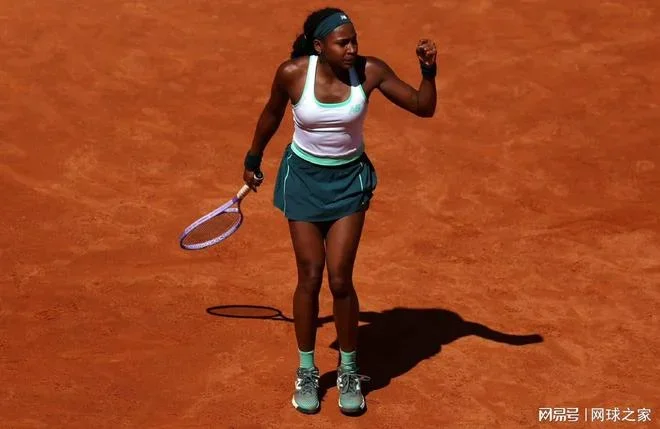
In an all-American showdown on center court, Gauff dropped the first set 5-7 after a key break. The second set saw Jovic serve for the match at 5-5 and hold a match point, but Gauff showed the resilience of a top-three player, saving the point and breaking back before taking the set 7-5. The deciding set was all Gauff, who broke twice to win 6-2 in a grueling 2-hour-41-minute battle.
This marks Gauff’s third consecutive year and fourth overall appearance in the Rome quarterfinals, as well as her 24th career quarterfinal at a WTA 1000 event. The consistent American continues to build momentum on clay.
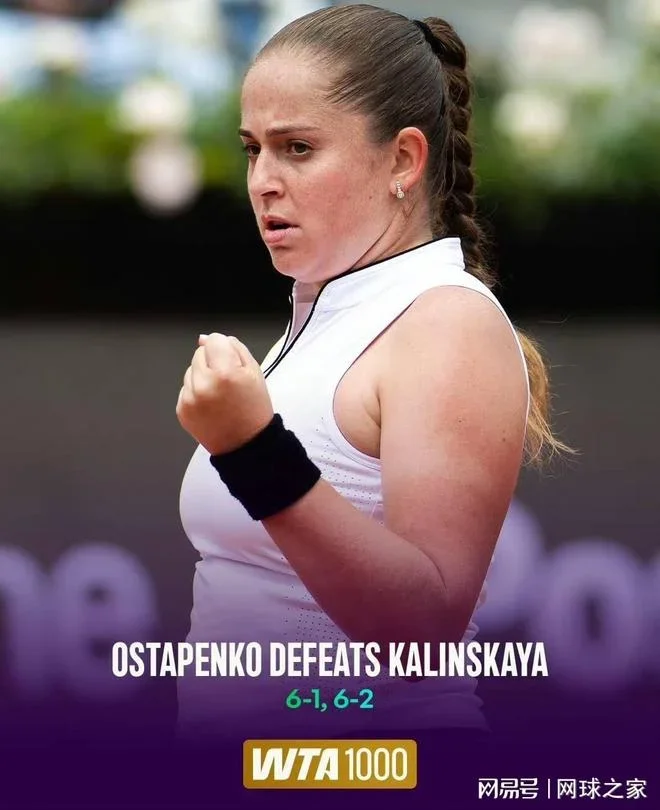
In contrast, Ostapenko’s victory was far more straightforward. The Latvian needed just 70 minutes to dispatch Kalinskaya 6-1, 6-2, finally overcoming an opponent who had beaten her three times previously. Ostapenko’s serve was dominant—she won 92% of first-serve points and 56% on second serve, while limiting Kalinskaya to just 29% on second serve.
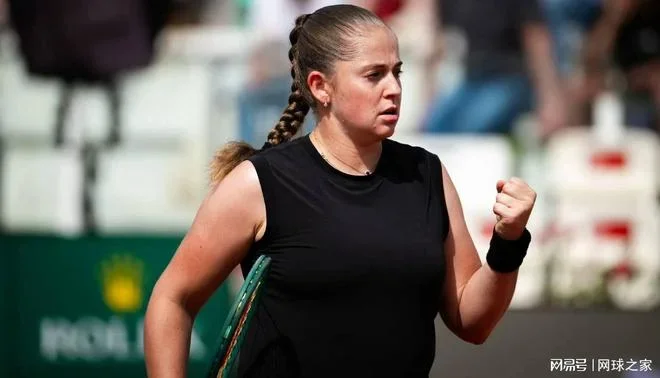
With wins over Zheng Qinwen (her first career victory against the Chinese star) and now Kalinskaya, Ostapenko has turned this Rome tournament into a personal revenge tour. She next faces Romanian veteran Sorana Cirstea, who has won their last two meetings.
However, the win was quickly overshadowed by the post-match scene. As players approached the net for the customary handshake, Kalinskaya ignored Ostapenko’s extended hand and walked straight to her chair. The moment was captured by television cameras and went viral on social media.
Tennis journalist José Morón tweeted that the two did not even acknowledge each other after the match, citing “extremely disrespectful comments” Ostapenko made about Kalinskaya in Dubai earlier this year. Reports indicate that during their February clash in Dubai, Ostapenko was involved in a verbal altercation with a Russian spectator supporting Kalinskaya, allegedly using insulting terms including “Putin’s mattress” and making controversial remarks about Russian players. Although Kalinskaya won that match, the incident created a deep rift.
The internet quickly embraced the situation, with fans coining phrases such as “Kalinskaya: After this match, I think I lost respect for Ostapenko.” Reactions have been divided. Rennae Stubbs, a veteran tennis commentator, said on air: “The WTA is facing a serious test. Politics has invaded the court too many times since 2022. I don’t like any form of refusal to shake hands, but I understand how hard it is for players caught in the middle.” Others have defended Kalinskaya, with the sports site Defector writing: “Being outspoken takes courage, but words can be weapons. When a player is humiliated on court because of her nationality—whether she agrees with her government’s actions or not—the hurt is real.”
Social media is split, with some arguing that “the one who offered the hand showed class; the one who refused looked worse,” while others counter: “No matter your stance, using insulting words against spectators and opponents’ countrymen on court crosses the line. Respect must be mutual.” The WTA has not yet issued an official statement on the incident.
